
Instagram DMs Are Probably Your Cheapest Sales Channel (Here's How to Actually Convert Them)
Most businesses pour money into ads while ignoring the Instagram DMs already landing in their inbox. Here's why DMs are the most underused sales channel in 2026, and a practical playbook for turning conversations into customers.
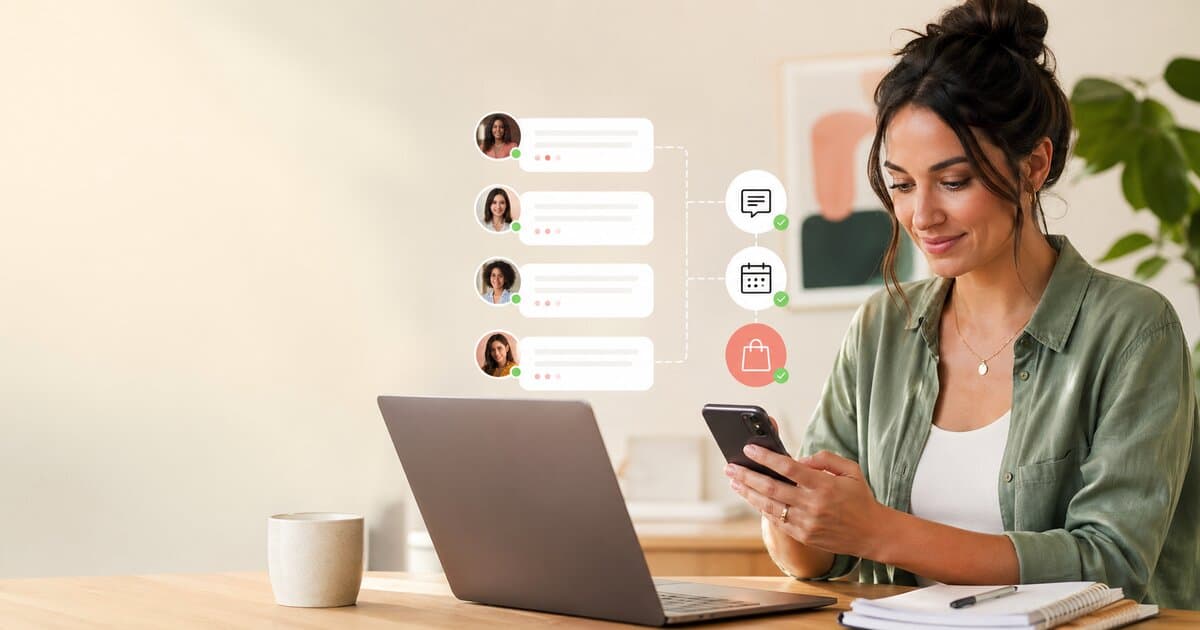
There's a quiet pile of money sitting in your Instagram DMs right now. Not a metaphor. Actual revenue, from people who already know who you are, already follow your account, and have already raised their hand by sending you a message.
Most of those messages get a response sometime between "tomorrow morning" and "never." A few get a reply two hours later that starts with "Hi, sorry for the wait." Some sit unread because the notification got buried under fifty likes and a story reply. And the rest, frankly, are answered by an overworked owner doing it between client appointments at 11 PM.
This is happening at the same time those owners are spending real money on ads to get new attention. It's one of the strangest patterns in small business marketing: paying to acquire cold attention while letting warm attention in the DMs go cold.
Let's talk about why that happens, why it's such a missed opportunity, and what it actually takes to turn DMs into customers without it eating your life.
The Economics of an Instagram DM
A DM is the most expensive piece of content on your Instagram account. You paid for it twice already.
Once in ad spend or content effort, to bring the customer to your profile in the first place. Once again in time and creative, to make them care enough to send you a message instead of scrolling past.
A cold lead from a new ad has none of that backstory. They've never heard of you, they're skeptical, and they need weeks of nurture (and more ad spend) to get anywhere near a buying decision.
A DM is the warm one. The DM is the one where the customer is leaning in and asking. And that produces a math problem that almost every owner has, but very few have written down:
- Cold leads from a new ad convert at low single-digit percentages and need extended nurture to do so.
- Warm DMs from existing followers convert at much higher rates, often within days, with no extra ad spend.
The exact numbers depend on your business, your audience, and your offer. The shape of the math is the same everywhere: the warm DM is the cheaper, faster, higher-converting channel, and most businesses are letting it leak.
If you're spending money on ads while ignoring the DMs those ads produce, you're paying full price for half the value. The conversion happens (or doesn't) in the inbox, not in the ad creative.
Why Most Businesses Don't Convert Their DMs
This isn't because owners are lazy. It's because the structure of Instagram DMs makes it really easy to underperform:
You can't see them all in one place easily. Especially if you have a personal account mixed with a business account, or multiple team members trying to help. Messages get fragmented across devices and people.
Notifications are noisy. Likes, story replies, follower notifications, and actual sales inquiries all show up in the same stream. Real DMs get drowned in low-stakes activity.
The Message Requests folder hides leads. Anyone who doesn't follow you (which, if you're trying to grow, is a lot of potential customers) lands in Requests. You have to actively dig in there to see them. Most owners don't, every day.
You only see one message at a time. Unlike an email inbox where you can scan headlines, DMs require you to open and read each thread. That makes triage slow.
The conversation has to feel personal. People expect you to remember context, respond quickly, and not sound like a script. That bar is hard to maintain at volume.
Mobile is the default. Most owners reply from their phone, often while doing something else. Replies are short, scattered across the day, and easy to forget mid-thread.
The net effect is that even owners who care deeply about their customers end up giving DMs the bottom-of-the-list treatment. Not on purpose. The inbox just punishes you for trying to keep up.
The Two Hidden Sources of Lost Revenue
Almost every Instagram-driven business has two specific leaks they can't see, and finding them is usually worth more than any clever marketing trick.
Leak #1: The Message Requests folder
Every time someone who doesn't follow you sends a DM, it lands in Requests. Most owners check Requests weekly, if at all. By the time they get to it, the lead has either gone cold or messaged a competitor.
Fix: check Requests at the same time and frequency you check the main inbox. If you can't, get a tool that surfaces Requests as part of your normal inbox flow.
Leak #2: Replies to your stories
Story replies are some of the highest-intent DMs you'll ever get. The customer just consumed your content and was moved enough to reply within seconds. But story replies look like throwaway reactions in the inbox, and a lot of them go unanswered because they read as "haha" or "love this."
Fix: treat every story reply, no matter how short, as the start of a conversation. A two-word reply is a perfect opening to ask a real question back. That's how a casual reaction becomes a qualified lead.
These two leaks alone are usually responsible for a significant chunk of an Instagram-driven business's missed opportunities. Plug them and you'll see results before you change anything else.
What "Converting a DM" Actually Looks Like
Most people imagine "converting a DM" as some smooth sales move. It isn't. The vast majority of conversions come from doing five very simple things consistently.
1. Respond Fast
The single biggest factor in whether a DM converts is how quickly you respond. Not because customers are impatient (some are), but because they're often messaging multiple businesses at once. The first one to reply with something useful tends to win, especially for service businesses where the customer is shopping around.
The realistic target inside business hours is under 10 minutes. Outside business hours, the bar is lower, but only if customers know they'll get a real response in the morning. Silence for 36 hours is not a normal small-business experience anymore. It's a "this business is closed or out of business" signal.
2. Reply Like a Human
The opposite of "automation that feels robotic" isn't "stop using automation." It's "make the response sound like a person who runs the business."
Use the customer's first name if they used theirs. Reference what they actually asked. Don't paste a giant list of services if they asked one specific question. The whole appeal of DMs is that they feel personal. The moment your reply sounds like a brochure, the customer disengages.
3. Ask, Don't Pitch
The single most common DM mistake is jumping straight into a pitch on the first reply. The customer says "do you do balayage?" and gets back "Yes! We have balayage starting at $180 with 12 stylists trained in the latest techniques. Click here to book!"
Slow down. The right move is almost always to ask one good question first.
"Yes, balayage is one of our most popular services. Quick question, do you have a rough idea of when you'd like to come in, and is your hair more on the shorter or longer side? That helps us point you to the right pricing and stylist."
That second message has dramatically higher conversion rates because it does two things at once. It answers the customer's question, and it pulls them into a real conversation where they can give you the details you need to qualify and book them.
4. Capture the Right Details Inside the Conversation
Don't send people to a form. Don't ask for their email address by message four. Capture what you need by asking one short question at a time, in the conversation, in the order that feels natural.
For most service businesses, "what you need" is:
- What service or product they're interested in
- Rough timing
- Their location (if it matters)
- A way to follow up if the chat goes cold (phone number is the gold standard, since you can move them to WhatsApp or SMS if Instagram's 24-hour window closes)
You can collect those four things across two or three messages without ever pulling the customer out of Instagram.
5. Get the Conversation to a Decision Point
Every DM thread should be moving toward one of three outcomes:
- A booking (or sale, if you're in commerce)
- A scheduled follow-up by phone, email, or in person
- A polite, honest "we're not the right fit" so the lead doesn't sit in your head forever
The thread that ends with "let me know if you want to chat more!" is a thread that ends. The thread that ends with "I've put you on the calendar for Saturday at 2 PM, let me know if anything changes" is a thread that converts.
A Realistic Day-in-the-Life
Here's what an Instagram inbox can look like with a structured assistant doing the first round:
8:14 AM. A potential customer DMs: "Do you do bridal hair?" The assistant replies in under a minute, confirms yes, asks about the wedding date and bridal party size, and captures her phone number for follow-up.
11:32 AM. Someone comments on a reel and gets pulled into DMs. The assistant introduces the price range, asks the right qualifying questions, and notes that the customer is outside the service area. It politely lets her know and offers a referral. No human time burned.
3:08 PM. A returning customer messages "hey, can I come in this week?" The assistant recognizes context, doesn't re-ask the basics, confirms availability windows, and tags it for the owner to handle the booking personally. The owner sees the thread later, sends two messages, and is done in 90 seconds.
11:47 PM. A DM comes in from a wedding planner asking about availability for a corporate event. The assistant qualifies, captures contact details, and flags it as a high-priority lead. The owner sees it the next morning over coffee, instead of either missing it or losing sleep.
That's six conversations in a normal day, all converted to "qualified, captured, ready for human follow-up" without the owner being in the inbox in real time. It's not magic. It's just the same five steps from earlier, applied consistently, by a tool that doesn't get tired.
The Hard Part: Doing This Consistently
You can read those five steps and nod along. The reality is that doing all five for every DM, every day, is brutal. A single owner with a busy account is going to burn out, miss messages, or start gating their availability with auto-replies that say "Please book through our website."
This is where the Instagram DM problem becomes a structural one, not a discipline one. You don't have a willpower issue. You have a volume issue with an inbox that wasn't built for sales.
There are basically three ways out:
1. Hire someone to handle DMs. A trained part-time DM manager can keep things personal, fast, and consistent. The downside is the cost and the coverage gap. DMs come in 24/7, not 9 to 5.
2. Use a structured AI assistant. This is the fast-growing option in 2026, and it's also the one Meta's updated WhatsApp and Messenger policies explicitly bless. Not a generic chatbot. A purpose-built tool that handles the first round of every conversation.
3. Cut your top of funnel. Run fewer ads, post less, grow more slowly, so the inbound matches what you can handle by hand. Perfectly reasonable if you want to stay small. Not the choice most growing businesses want to make.
The first two work well for different stages. A handful of DMs a day? Do it yourself or hire help. Dozens or hundreds? You're going to need automation, and the question is just whether the automation feels like a real conversation or a script.
What to Track
If you want to know whether your DM strategy is working, watch four numbers:
Response time. Median time from when a customer sends their first DM to when they get a substantive reply (not "I'll get back to you").
Reply rate. Percentage of inbound DMs that get a response at all. Should be 100%. If it's not, something is leaking.
Qualified-lead rate. Of the people who DM you, how many turn into a real qualified lead? This depends on your audience and content, but it's usually a healthy share for warm Instagram traffic.
Conversion-to-customer rate. Of the qualified leads, how many actually buy or book within a defined window (usually 30 days)? For most service businesses, this is a meaningful share with a good first conversation.
If you can't answer those four questions about the last 30 days of DMs, you're flying blind. Start tracking even rough numbers, and you'll quickly see which step is leaking value.
Where Replypop Fits
Replypop is built specifically for the Instagram DM problem. It plugs into your inbox, runs the first round of every DM in a way that sounds like your business, qualifies the lead against the questions you've defined, and hands you the warm ones with a clean summary.
A few things specifically worth knowing for Instagram:
Message Requests get the same treatment as your main inbox. Leads from non-followers don't sit in a folder you forgot about. They get a fast, useful reply just like everyone else.
Story replies don't get ignored. Those one-word, high-intent reactions become real conversations instead of dying in the noise.
Phone number capture is built in. Instagram's 24-hour reply window is strict, with no template system. The assistant naturally asks for a phone number during qualification so the lead doesn't go dark just because the platform window closes. You can follow up on WhatsApp or SMS without scrambling.
One inbox across channels. When a lead messages you on Instagram and later WhatsApps you, they show up as the same person, with conversation history intact across both channels.
Honest about being AI. When customers ask, the assistant tells them. Anyone can ask for a human at any time, and the handoff is one message away with full context preserved.
We're not the only option here, and DMs aren't the only thing Replypop does. But it's a clean fit for the specific job of "stop letting DMs sit, but don't lose what's special about a real DM conversation."
The Final Pitch (To Yourself, Not Us)
If you're an Instagram-driven business and you're not converting your DMs at the rate you should be, the highest-leverage thing you can do this quarter is probably not a new ad campaign or another reel. It's fixing the inbox.
Every cold customer you bring in costs more than the warm one already in your DMs. Every minute you spend producing content that drives DMs is wasted if those DMs aren't converted. The biggest leverage is at the bottom of the funnel, in the conversation, not at the top.
Whether you fix it with a hire, an assistant, or a renewed personal commitment to your inbox is up to you. But fix it. The math is too lopsided to keep ignoring.
Frequently Asked Questions
DMs come from people who've already engaged with your account, so the acquisition cost was already paid through your ads or content. They convert at much higher rates than cold leads, with no additional ad spend. The cost-per-conversion math heavily favors DMs over net-new acquisition.
Yes, as long as the AI has a defined business purpose (like qualifying leads or answering FAQs), is honest when asked whether it's a person, and lets customers reach a human at any time. General-purpose AI chatbots are no longer allowed under Meta's 2026 policies, but purpose-built AI assistants are explicitly encouraged.
Inside business hours, under 10 minutes is the realistic bar. Outside business hours, customers will accept a delayed reply only if they know one is coming, which is why automation that responds immediately is a meaningful upgrade for most businesses.
Instagram doesn't have a template system like WhatsApp, so you can't proactively message after the window closes. The right move is to capture a phone number during the first conversation and follow up via WhatsApp or SMS. Capturing the number naturally is part of a good qualification flow.
Yes. Most leads from non-followers (often the highest-intent traffic for growing businesses) land in Requests, and most owners forget to check. Either build a daily habit or use a tool that surfaces Requests in the same flow as your main inbox.
Absolutely. Story replies are some of the highest-intent DMs you'll get because the customer just consumed your content and was moved enough to reply. Even one-word reactions are perfect openings for a real conversation. Treat them like leads, not throwaways.
Questions or feedback? Reach out anytime